Eight questions about the book, 0 about the whole of it and eight about single chapters. Each one is answeredfour ways, through a literary theory or an idea from philosophy, sociology, psychology or religion.
The answers don’t always agree. Some theories open a question up and some have little to say about it, and each answer says which. Swipe or use the arrows to move between them.
The diary opens: “I’ve been cordially invited to join the visceral realists. I accepted, of course. There was no initiation ceremony.” The next day García Madero admits, “I’m not really sure what visceral realism is.” The group meets at the Café Quito, steals its books, holds mock purges, and sees itself “trapped as we are between the reign of Octavio Paz and the reign of Pablo Neruda.”
Field theory
How do artists earn prestige, and what do they give up for it?
Pierre Bourdieu described literature as a field where newcomers win standing by attacking the people who already hold it. Visceral realism is a textbook position-taking. Its enemies are named, Paz and Neruda, and its rituals are the rituals of a small avant-garde: a café of its own, a magazine, purges, contempt for workshops like Álamo’s.
The joke is that the purges aren’t real. “The purge of visceral realism is just a joke,” Lima says. Bourdieu would say the gesture is what counts. A movement needs enemies and exclusions to exist, even pretend ones.
Opens a lot here
Where it falls short. It explains the group’s maneuvers, not why any of its members write poems at all.
Pierre Bourdieu, The Rules of Art (1992)
The anxiety of influence
How do writers make room for themselves against the writers who formed them?
Harold Bloom said strong poets have to wrestle with the great poet before them. The visceral realists refuse the wrestling match. Instead of Paz, they choose a forgotten precursor: Cesárea Tinajero, a poet of the 1920s who published almost nothing and, according to Belano, “vanished in the Sonora desert.”
An unread mother is the perfect precursor. She can’t overshadow you, and you can make her into whatever you need. The trip north in part three is the moment that strategy is tested against the real woman.
Opens a lot here
Where it falls short. We never see the visceral realists’ poems, so the theory can only describe the strategy, not judge the results.
Harold Bloom, The Anxiety of Influence (1973)
Deconstruction
Where does the text undo what it claims?
Deconstruction looks at how meaning is always put off and never arrives. Visceral realism is never defined in the diary. Every attempt to explain it ends in another name (“viscerealists or even vicerealists”), another anecdote, another trip.
The movement exists as the search for its own definition, and by the end of part three Lupe tells García Madero they are “the last visceral realists left in Mexico.”
Some light
Where it falls short. It turns a funny, specific group of friends into an example of a general theory.
Jacques Derrida, “Différance” (1968)
Marxist criticism
Who pays, who works, and how does the text hide it?
The group crosses class lines. Pancho Rodríguez’s family are “lowly and working-class”; the Fonts are “firmly ensconced” in Mexico City’s petit bourgeoisie. García Madero, raised by an aunt and uncle who want him to be a lawyer, is somewhere in between. Poetry is the one place they can meet as equals, and they pay for it by stealing books.
Some light
Where it falls short. The diary treats money mostly as a joke or an obstacle, and gives the theory little to build on.
Terry Eagleton, Marxism and Literary Criticism (1976)
2 · Parts 1 and 3 · García Madero
Is the diary a coming-of-age story?
MarielMorales, CC0
“I’m seventeen years old, my name is Juan García Madero, and I’m in my first semester of law school.” He is an orphan, raised by an aunt and uncle who want him to be a lawyer. In two months he loses his virginity, falls for María Font, steals books, and on New Year’s Eve leaves the city in Quim Font’s Impala. “I realized that I’d always wanted to leave.”
Genre theory
What rules does the genre set up, and what happens when the book breaks them?
The Bildungsroman follows a young man from home into the world until he finds his place in it. The diary has every piece: an orphan, a guardian’s career plan, teachers, first love, a journey. Then it refuses the ending. García Madero doesn’t return home or find a place. The diary trails off into lists of towns and three drawings of a window.
It is a coming-of-age story that stops before he comes of age, which may be truer to seventeen than a neat ending would be.
Opens a lot here
Where it falls short. The genre explains what is missing at the end better than what is there.
Franco Moretti, The Way of the World: The Bildungsroman in European Culture (1987)
Feminist criticism
Whose voice, work and point of view does the text center, and whose does it use?
The boy is initiated by women. Rosario, the waitress, wants to marry him. María takes him in and then pulls away. Lupe, who has lost a son, knows more about the world than all the poets put together. And the whole quest ends with a woman, Cesárea, who has lived a life none of them can imagine.
A feminist reading notices that the women carry the hard knowledge, and that the diary, written by a boy, mostly records what they mean to him.
Opens a lot here
Where it falls short. García Madero is often aware of this himself, and the reading can miss his self-mockery.
Sandra Gilbert and Susan Gubar, No Man’s Land (1988)
Psychoanalytic criticism
What does the text do with a wish or a loss it can’t face directly?
“I’m an orphan, and someday I’ll be a lawyer. That’s what I told my aunt and uncle, and then I shut myself in my room and cried all night.” The uncle stands in for the father and for the law, literally. Poetry is the way out.
A psychoanalytic reading would hear the whole diary in that first night of crying, and in the line on New Year’s Eve: he had always wanted to leave.
Some light
Where it falls short. The diary moves too fast and laughs too much to sit still for analysis.
Sigmund Freud, “Family Romances” (1909)
Carnival
Where does the text turn order upside down with laughter, sex and the body?
Mikhail Bakhtin wrote about carnival: festive times when the low is raised and the high brought down, with laughter, sex and the body at the center. Part one is full of it. Purges that are jokes, sex that is comic and desperate, a seventeen-year-old lecturing his teacher on the rispetto.
Growing up here doesn’t mean learning the rules. It means a few weeks when the rules are suspended.
Some light
Where it falls short. Carnival ends and order returns. Here the party ends with a killing in the desert, which the theory doesn’t prepare you for.
Mikhail Bakhtin, Rabelais and His World (1965)
3 · Part 1 · Mexico City
What does Mexico City do in the diary?
ProtoplasmaKid, CC BY-SA 4.0
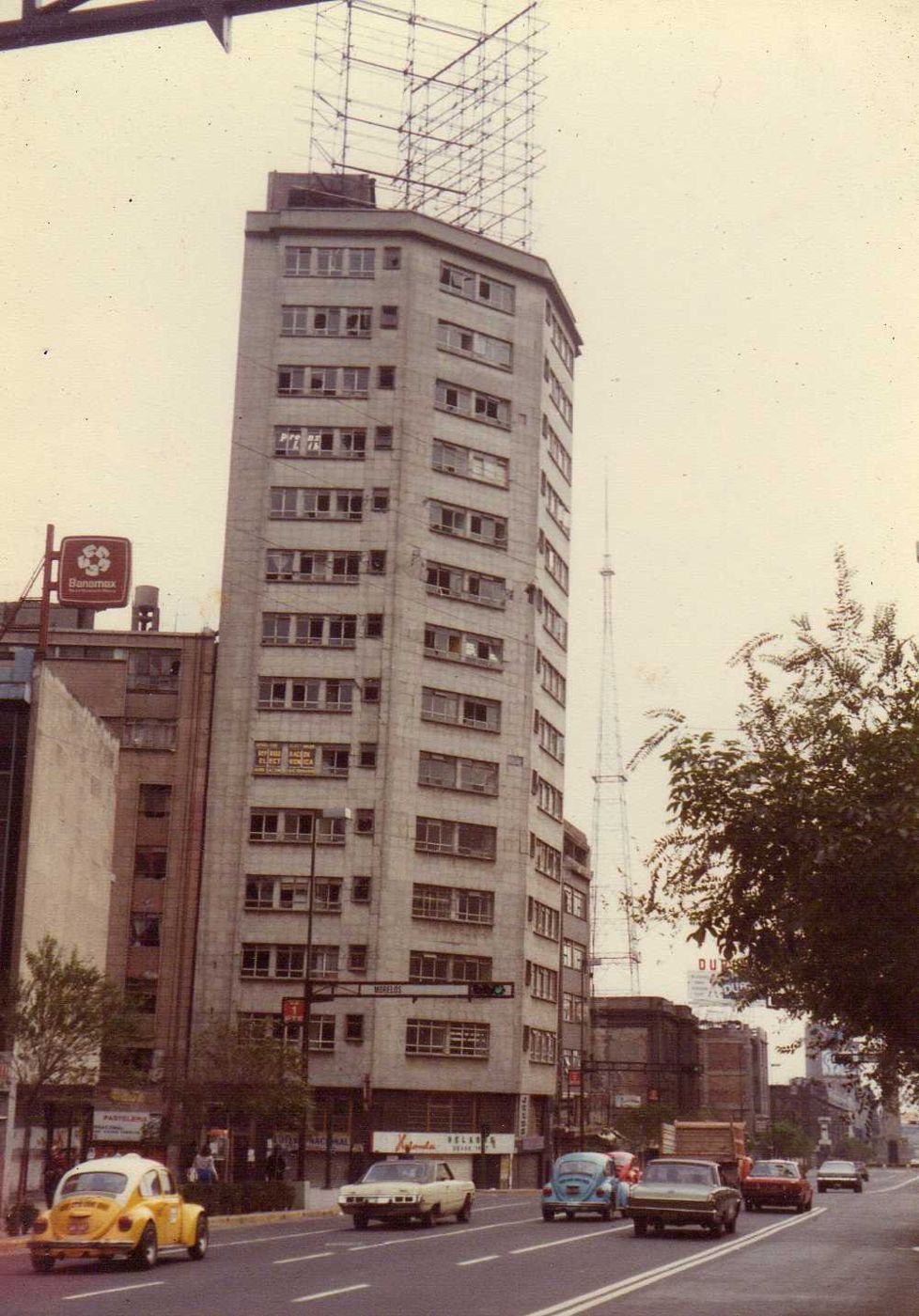
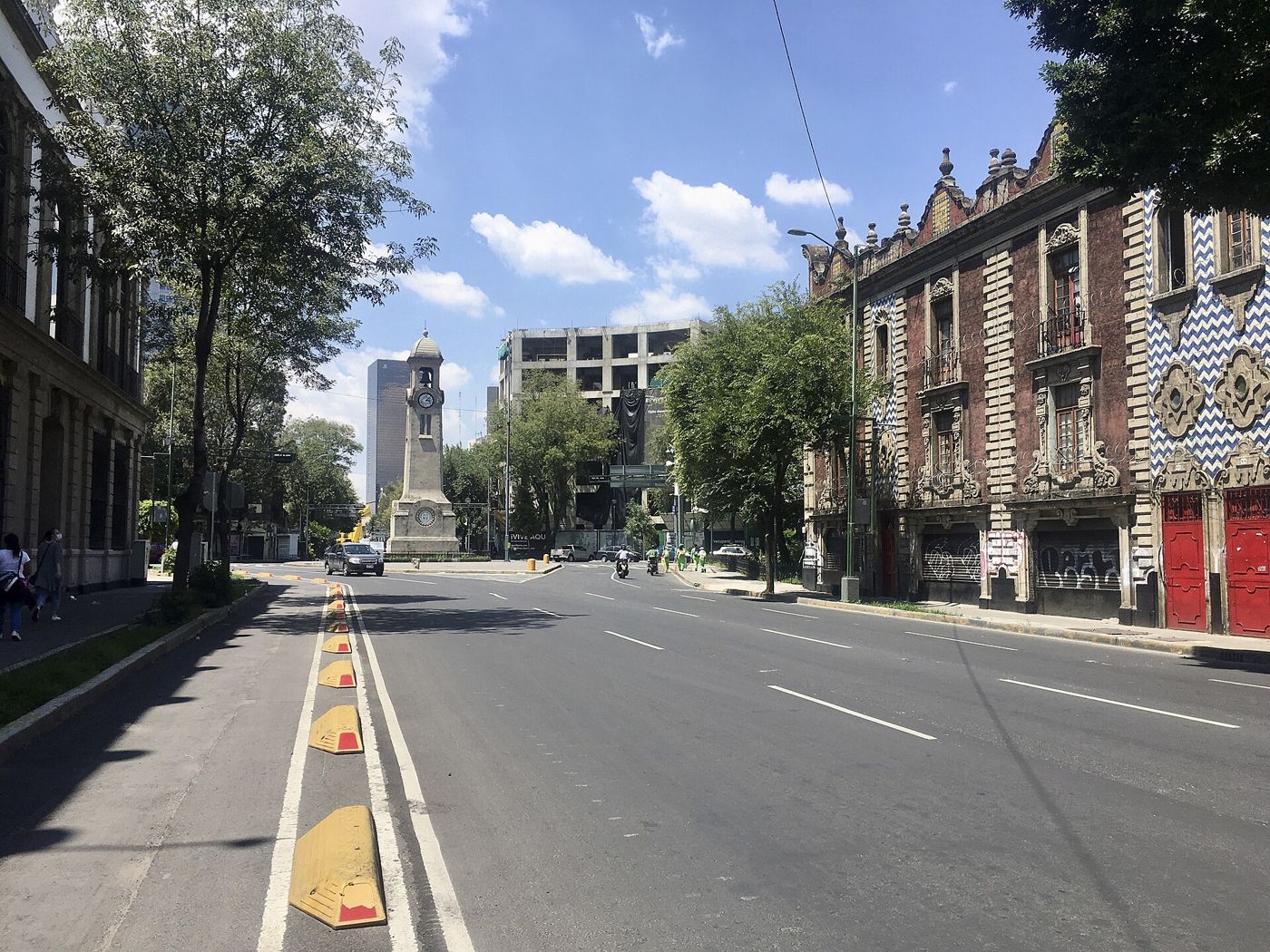
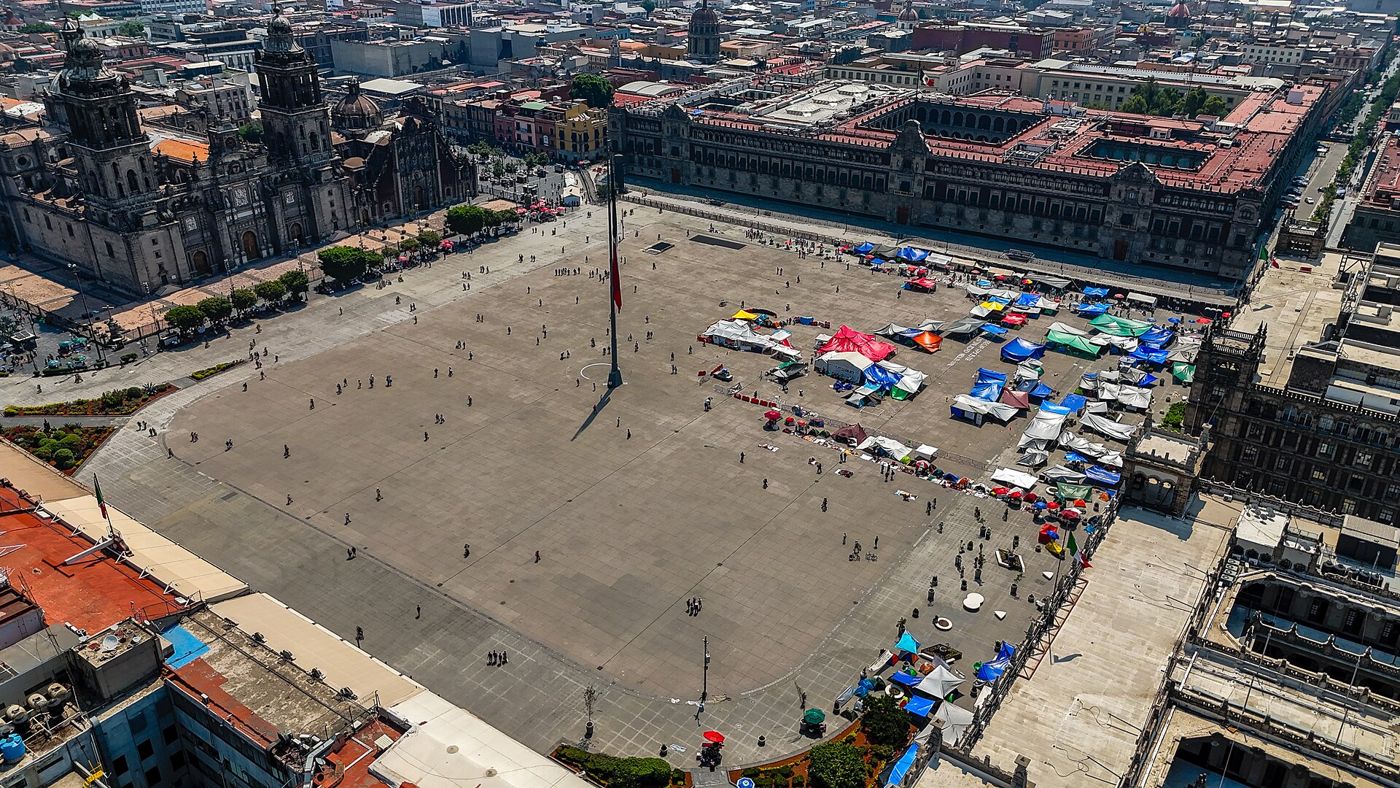
García Madero walks everywhere and names every street. Out of the Condesa with Pancho, “through the Parque España, down Parras, through the Parque San Martín, and along Teotihuacán.” Up Avenida Guerrero with María, where the streetlights are amber instead of white.
The flâneur
What does a walker learn by reading the city street by street?
Walter Benjamin wrote about the flâneur, the walker who reads the city like a text. García Madero is a flâneur at seventeen. Walking from Bucareli to Guerrero, he lists the differences: “The streetlights on Bucareli are white, but on Avenida Guerrero they had more of an amber tone.” Parked cars, closed bars, no big windows, music.
The city teaches him before the poets do. He learns where he is by noticing what changes block by block.
Opens a lot here
Where it falls short. Benjamin’s flâneur is an idle man of leisure. García Madero walks because he is broke and has nowhere else to be.
Walter Benjamin, The Arcades Project (written 1927–40)
Walking in the city
How do people make their own paths through a city they don’t own?
Michel de Certeau said that walking is to the city what speaking is to language: each walker makes his own sentences out of the streets. The diary is made of those sentences, lists of streets and turns: Manzanillo, Aguascalientes, Medellín, Tepeji.
The visceral realists don’t own any of the city. They borrow it, a table at a café, a rooftop room, a courtyard behind someone else’s house.
Opens a lot here
Where it falls short. It explains the routes better than the people met along them.
Michel de Certeau, The Practice of Everyday Life (1980)
Marxist criticism
Who pays, who works, and how does the text hide it?
The map of part one is a map of class. García Madero comes in from Lindavista. María lives behind a two-story house on Calle Colima. Lupe works on Avenida Guerrero. Rosario lives in a tenement out in Merced Balbuena. Pancho’s family lives in an apartment on Calle Tepeji.
Poetry lets the boy cross those lines in a way his uncle’s law degree never would.
Opens a lot here
Where it falls short. It sees the city as a system and misses how much of it is pleasure.
David Harvey, Social Justice and the City (1973)
The poetics of space
How do rooms and shelters shape the imagination?
Bachelard wrote about rooms as shelters for daydreams, and there are a few in the diary: Lima’s rooftop room “ten feet by eight,” the little house at the back of the Fonts’ courtyard, Rosario’s room with its postcards of Veracruz.
But García Madero rarely stays in them. He is almost always on his way somewhere else.
Little to work with
Where it falls short. A theory of rooms for a book that lives in the street.
Gaston Bachelard, The Poetics of Space (1958)
4 · Parts 1 and 3 · Cesárea Tinajero
Why do they go looking for Cesárea Tinajero?
Scalif, CC BY-SA 3.0
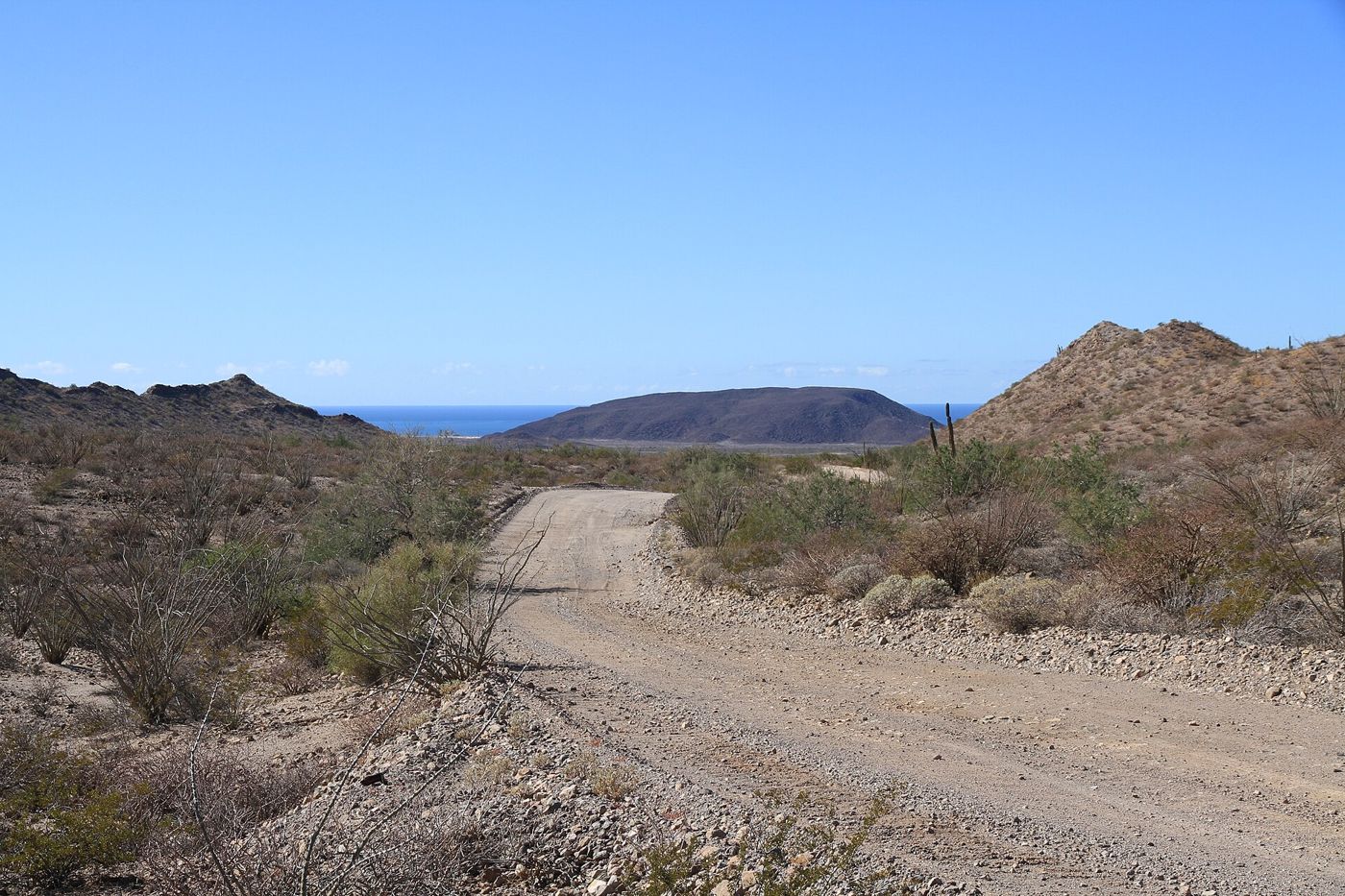
Belano says the first visceral realists “vanished in the Sonora desert.” In part three the poets drive north to find the woman behind the name, through libraries, cemeteries and schools, until they find her at a washing trough in Villaviciosa: “Seen from behind, leaning over the trough, there was nothing poetic about her.”
Myth criticism
What old story patterns, like the quest, does the book follow or break?
Northrop Frye described the quest romance: a journey into a dangerous land to recover something lost, with trials along the way. Part three follows the pattern closely. The poets cross the desert, consult oracles (an old matador, a village teacher), follow signs (a grave with her name on it), and find what they were looking for.
Then the romance breaks. The thing they find is a heavy, barefoot washerwoman, and the recovery costs her life.
Opens a lot here
Where it falls short. It explains the shape of the trip but not the flatness and comedy of the telling.
Northrop Frye, Anatomy of Criticism (1957)
Feminist criticism
Whose voice, work and point of view does the text center, and whose does it use?
Cesárea is a woman poet whose work has nearly vanished. A schoolteacher once had one of her notebooks: “Her husband had read it and thrown it away.” In Villaviciosa there are more notebooks, and García Madero reads them, but the reader never does.
A feminist reading sees the search as a recovery of a lost woman writer, and notices how the book still keeps her words from us.
Opens a lot here
Where it falls short. The book is sly about this. It may be making the same point the reading makes.
Elaine Showalter, A Literature of Their Own (1977)
Borderlands theory
What does life look like from the border, between two countries?
Sonora sits on the border, and the search keeps brushing it. In El Cubo a teacher from Guaymas teaches children Spanish and Pápago, “so the language won’t be lost.” Cesárea told a friend she sometimes lived in El Palito, in Arizona. Belano can’t follow: “Because I’m Chilean,” he says.
Anzaldúa’s idea of the borderlands as a place of mixed languages and lives helps you see the desert as a place in its own right, not just a backdrop for poets from the capital.
Some light
Where it falls short. The poets mostly pass through; the borderland lives they glimpse stay on the edge of the diary.
Gloria Anzaldúa, Borderlands/La Frontera (1987)
Christian reading
What does the story share with scripture and Christian practice?
The search has the shape of a pilgrimage: a long road to a holy figure in a remote place, with relics along the way (a magazine, a grave, a notebook). And the holy figure dies for the pilgrims.
Some light
Where it falls short. The poets aren’t looking for anything sacred, and the reading has to supply the faith.
Victor and Edith Turner, Image and Pilgrimage in Christian Culture (1978)
5 · Part 1 · November 16, Avenida Guerrero
What changes when María takes him up Avenida Guerrero?
María walks him from Bucareli across Reforma and up Avenida Guerrero. “This is where the whores are.” There she introduces him to her friend Lupe, who tells them how she once nearly died on a bench in the Plaza San Fernando. Lupe is running from her pimp, Alberto, and his protection will take the story to Sonora.
Feminist criticism
Whose voice, work and point of view does the text center, and whose does it use?
Lupe is the first person in the diary with a life truly at stake. She tells her story herself: drinking, the glue someone gave her, vomiting blood, “I was just remembering my son and my broken promise and the Virgen de Guadalupe.” Her son died.
A feminist reading asks what it means that a girl’s escape from a pimp becomes the poets’ adventure.
Opens a lot here
Where it falls short. The book lets Lupe speak for herself more often than the reading allows.
bell hooks, Feminist Theory: From Margin to Center (1984)
Marxist criticism
Who pays, who works, and how does the text hide it?
Avenida Guerrero is where the city’s sex trade works, a few blocks from the poets’ café. Lupe’s body is someone else’s source of income, and her pimp’s threats are a matter of business. García Madero’s walk shows how close the two worlds are.
Opens a lot here
Where it falls short. It explains Lupe’s situation, not her personality, which is the liveliest in the book.
Friedrich Engels, The Origin of the Family, Private Property and the State (1884)
Masculinity studies
How do men measure themselves against a model of manhood?
Alberto is masculinity as threat: a knife he uses “to measure his penis,” a yellow Camaro, a policeman friend. The poets answer with their own posturing, and in the end with a knife of their own. Belano buys one in Caborca and uses it on Alberto in the desert.
Read this way, the novel’s violence is a contest between two kinds of men over a young woman who wanted to get away from both.
Opens a lot here
Where it falls short. It flattens the difference between a pimp and friends who risk their lives for Lupe.
R. W. Connell, Masculinities (1995)
Recognition theory
What happens when people need to be seen and valued and aren’t?
Axel Honneth argues that people need to be recognized as equals. The poets treat Lupe as one of them. By February she is the one who says they are “the last visceral realists left in Mexico.”
Some light
Where it falls short. Recognition doesn’t keep her safe, and the theory has little to say about what happens next.
Axel Honneth, The Struggle for Recognition (1992)
6 · Part 1 · December 9–10, the bookstores
Is stealing books a way of reading?
Lang Babylon, CC BY-SA 4.0
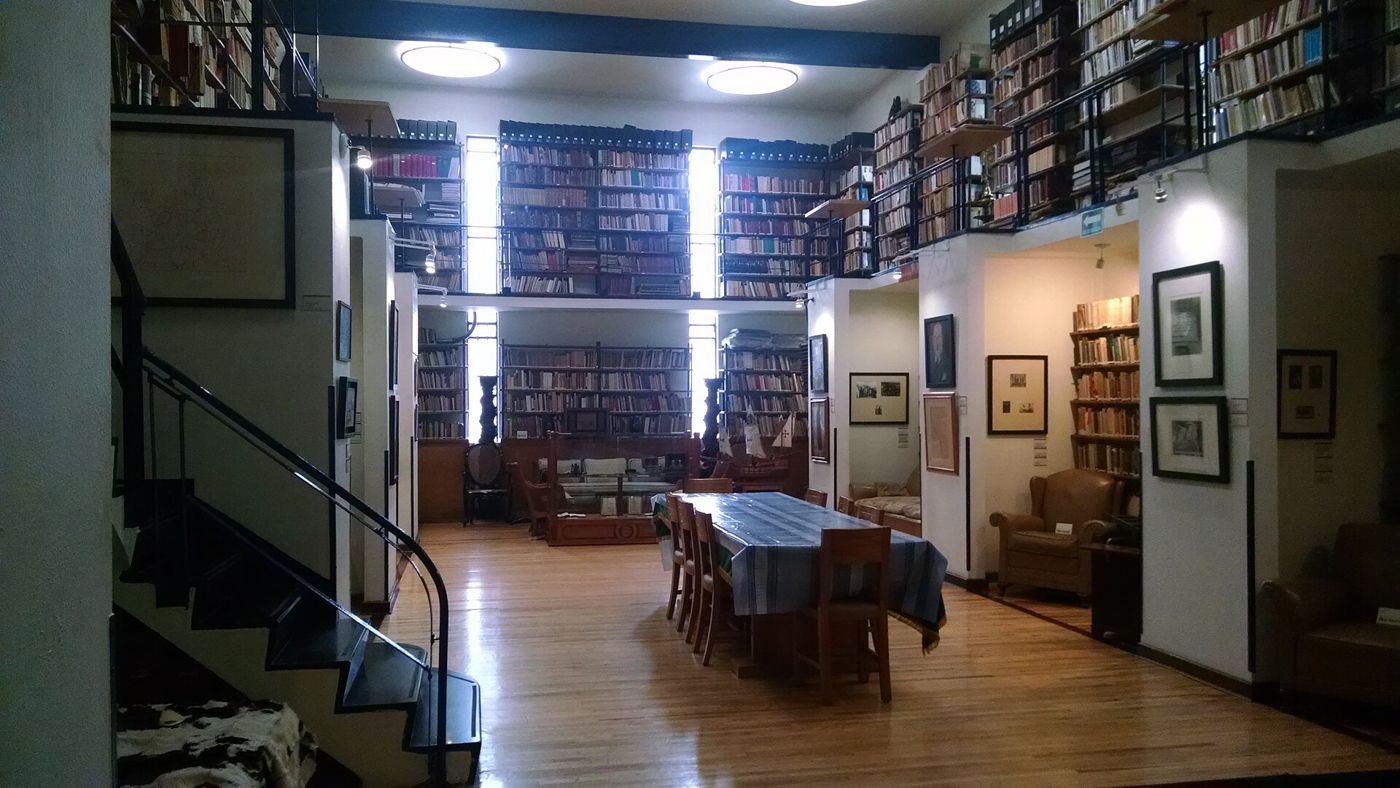
“The Mexican literary mafia has nothing on the Mexican bookseller mafia.” García Madero makes the rounds: the Librería del Sótano on Avenida Juárez, the Librería Mexicana on Calle Aranda, the Pacífico, the Orozco, the Milton, El Mundo, leaving with Othón, Nervo, Desnos, Borges, Keats. The poets taught him this; they steal their books from the Librería Francesa and the Librería Baudelaire.
Mimetic desire
Do we want things because someone close to us wants them?
René Girard said we want what our models want. The diary says it in passing: “what one visceral realist reads is soon read by the rest of the group.” García Madero asks where to get the books the others carry, and the answer is to steal them the same way.
Taste spreads by imitation, and stealing is how a seventeen-year-old makes another poet’s reading his own.
Opens a lot here
Where it falls short. It explains why he wants the books, not what he finds in them.
René Girard, Deceit, Desire and the Novel (1961)
Field theory
How do artists earn prestige, and what do they give up for it?
For Bourdieu, the avant-garde shows its seriousness by refusing the market. Paying for poetry would make it a commodity; stealing it keeps it a cause. The book thief is the opposite of the bookseller “mafia,” and the stolen lists read like a manifesto: French surrealists, Latin American poets, a Spanish anthology.
Opens a lot here
Where it falls short. It reads the thefts as strategy, when they are also simply what broke students do.
Pierre Bourdieu, The Rules of Art (1992)
Marxist criticism
Who pays, who works, and how does the text hide it?
Books are property, and the clerks who watch him are paid to protect it. A Marxist reading notices that the thefts land on bookstores and the clerks paid to watch them, not on publishers or the state. The diary doesn’t pause on this.
Some light
Where it falls short. The diary has no interest in the clerks’ side, so the reading has to bring it in from outside.
Karl Marx, Capital, volume 1 (1867)
Kantian aesthetics
Can beauty be enjoyed without wanting anything from it?
Kant would say plainly that stealing can’t be a universal rule: if everyone stole books, there would be no bookstores to steal from. True, and the book doesn’t argue the point. It isn’t asking whether stealing is right but what it means to the boy.
Little to work with
Where it falls short. A correct answer to a question the book doesn’t ask.
Immanuel Kant, Groundwork of the Metaphysics of Morals (1785)
7 · Part 3 · February 1, the road outside Villaviciosa
Why does Cesárea die as soon as they find her?
panza.rayada, CC BY-SA 3.0
Alberto and a policeman catch up with them on the road outside Villaviciosa. Belano stabs Alberto. Lima wrestles with the policeman, and Cesárea, “who could hardly run but was running,” throws herself onto them and is shot. Belano says “that we’d found Cesárea only to bring her death.”
The anxiety of influence
How do writers make room for themselves against the writers who formed them?
In Bloom’s terms, the young poets have done what every strong poet secretly wants: they have found their precursor and outlived her. The founder of visceral realism dies, and the movement is left to the young.
But the book makes the wish literal, and grief replaces triumph. Belano’s line is an admission that the search itself did the harm.
Opens a lot here
Where it falls short. It makes a chance killing into a theory of influence, which the scene’s confusion resists.
Harold Bloom, The Anxiety of Influence (1973)
Christian reading
What does the story share with scripture and Christian practice?
Cesárea dies saving Lima: she falls onto the policeman as he aims at Ulises’s head. García Madero sees her back afterward “like a stern emerging from a centuries-old shipwreck.” A Christian reading sees a sacrifice, a life given for a friend.
Opens a lot here
Where it falls short. García Madero isn’t sure what happened. A few days later he wonders whether she had anything to do with the policeman’s death at all.
John 15:13
Feminist criticism
Whose voice, work and point of view does the text center, and whose does it use?
The poets spend part three looking for a woman, and the moment they find her she is killed in a fight between men over another woman. Her notebooks end up with a seventeen-year-old who decides not to mail them to anyone.
A feminist reading sees a familiar pattern: the woman writer is found and silenced in the same week.
Opens a lot here
Where it falls short. The book offers it as tragedy, not as a thesis, and the reading can flatten that.
Sandra Gilbert and Susan Gubar, The Madwoman in the Attic (1979)
The absurd
How do people live when the world gives no meaning back?
García Madero can’t say what happened. “Sometimes I think about the fight as if it were a dream.” He imagines it one way, then another. Camus would recognize a death without a reason, followed by a life that goes on anyway: “The food is cheap here. But there isn’t any work.”
Some light
Where it falls short. It explains the diary’s flat tone after the death better than the death itself.
Albert Camus, The Myth of Sisyphus (1942)
8 · Part 3 · February 13–15, the last page
What’s outside the window?
Comisión Mexicana de Filmaciones, CC BY-SA 2.0
The diary ends with three entries that are drawings: a window frame with a small mark at one edge, “A star”; an empty frame, “A sheet”; and a window drawn in a dotted line, with the question and no answer. Earlier, in the car, García Madero amused the others with drawings like these: “A Mexican seen from above.”
Reader-response
What does the reader bring, and what does the text leave for the reader to fill in?
Wolfgang Iser said meaning happens in the gaps a text leaves for the reader. The last page is nothing but a gap. The first two windows have answers. The third has a dotted frame and a question, and the reader is the only one left to answer it.
García Madero has been asking riddles since the car left Mexico City. The book ends by asking one of us.
Opens a lot here
Where it falls short. It describes the effect without saying what, if anything, is out there.
Wolfgang Iser, The Act of Reading (1976)
Deconstruction
Where does the text undo what it claims?
A window is supposed to show you something beyond itself. These show only the frame, and the last frame isn’t even solid. Deconstruction would say the book ends by showing that every view is made by a frame, and the frame here is coming apart.
Opens a lot here
Where it falls short. It explains the dotted line, but it would explain any ending.
Jacques Derrida, The Truth in Painting (1978)
New Criticism
What do the words on the page do, apart from the author’s life?
Read closely, the windows answer the riddles in the car. Those were Mexicans drawn as shapes, seen from above or from odd angles. The windows turn the joke inward: the viewer is inside now, looking out. The last image of a book about young poets searching for a lost poet is a boy in a room asking what’s out there.
Some light
Where it falls short. It finds the pattern but has to guess at its meaning.
Cleanth Brooks, The Well Wrought Urn (1947)
Psychoanalytic criticism
What does the text do with a wish or a loss it can’t face directly?
A star, then a sheet: you could read a shroud in the second answer, and a death wish in the empty third. But nothing in the diary supports it. García Madero is on the run, in love and alive. The theory supplies a darkness the page doesn’t show.
Little to work with
Where it falls short. More projection than reading.
Sigmund Freud, The Interpretation of Dreams (1899)