Eight questions about the book, four about the whole of it and four about single chapters. Each one is answeredfour ways, through a literary theory or an idea from philosophy, sociology, psychology or religion.
The answers don’t always agree. Some theories open a question up and some have little to say about it, and each answer says which. Swipe or use the arrows to move between them.
Nick opens by telling us he is “inclined to reserve all judgements.” Later he says, “I am one of the few honest people that I have ever known.” And near the end he admits that he “disapproved of him from beginning to end.” Everything we know about Gatsby comes through him.
Narratology
Who tells the story, and how far should we trust him?
Wayne Booth called a narrator unreliable when his values differ from the values the book as a whole asks us to hold. Nick fits in small ways. He says he reserves judgment, and he judges everyone. He calls Jordan “incurably dishonest” and then says of himself that honesty is his one virtue.
He is reliable about what happened and unreliable about what it meant. The book lets you see the gap, which is how it can admire Gatsby and doubt Nick’s admiration at once.
Opens a lot here
Where it falls short. It can make Nick sound like a liar, when most of the time he is simply young and caught up.
Wayne C. Booth, The Rhetoric of Fiction (1961)
Queer theory
How does the text handle desire that doesn’t fit the expected pattern?
Chapter 2 ends with a jump. Nick leaves the party with Mr. McKee, and the next thing we read is “I was standing beside his bed and he was sitting up between the sheets, clad in his underwear.” Then Nick is waiting for a train at four in the morning. What happened in between is left out.
Queer readings add this to Nick’s close attention to men’s bodies, Tom’s “cruel body” in chapter 1, and to his devotion to Gatsby. They argue that Nick hides something from us, or from himself.
Some light
Where it falls short. The evidence is a gap and some descriptions, and the reading has to fill the gap to make the case.
Eve Kosofsky Sedgwick, Epistemology of the Closet (1990)
Marxist criticism
Who pays, who works, and how does the text hide it?
Nick tells us his family have been “prominent, well-to-do people in this Middle Western city for three generations,” with a claim to descend from the Dukes of Buccleuch. He comes East to sell bonds. His “reserve” is a class habit, the calm of people who don’t have to want things.
Read this way, his judgment of Gatsby is the judgment of inherited money on a man who had to make it, softened at the end into pity.
Some light
Where it falls short. Nick also rejects Tom and Daisy, who are richer and older money than he is, so class doesn’t explain all his loyalties.
Lionel Trilling, “F. Scott Fitzgerald,” in The Liberal Imagination (1950)
Feminist criticism
Whose voice, work and point of view does the text center, and whose does it use?
The women in the book reach us through Nick’s judgments. Jordan is “incurably dishonest,” Myrtle is all body and noise, Daisy is a voice. Their reasons mostly go unheard.
A feminist reading asks how differently Daisy’s choices would look in her own words. The book doesn’t give them, which tells you something about the narrator.
Some light
Where it falls short. It shows what is missing more than what is there.
Judith Fetterley, The Resisting Reader (1978)
2 · The whole book
What is the American dream in the book?
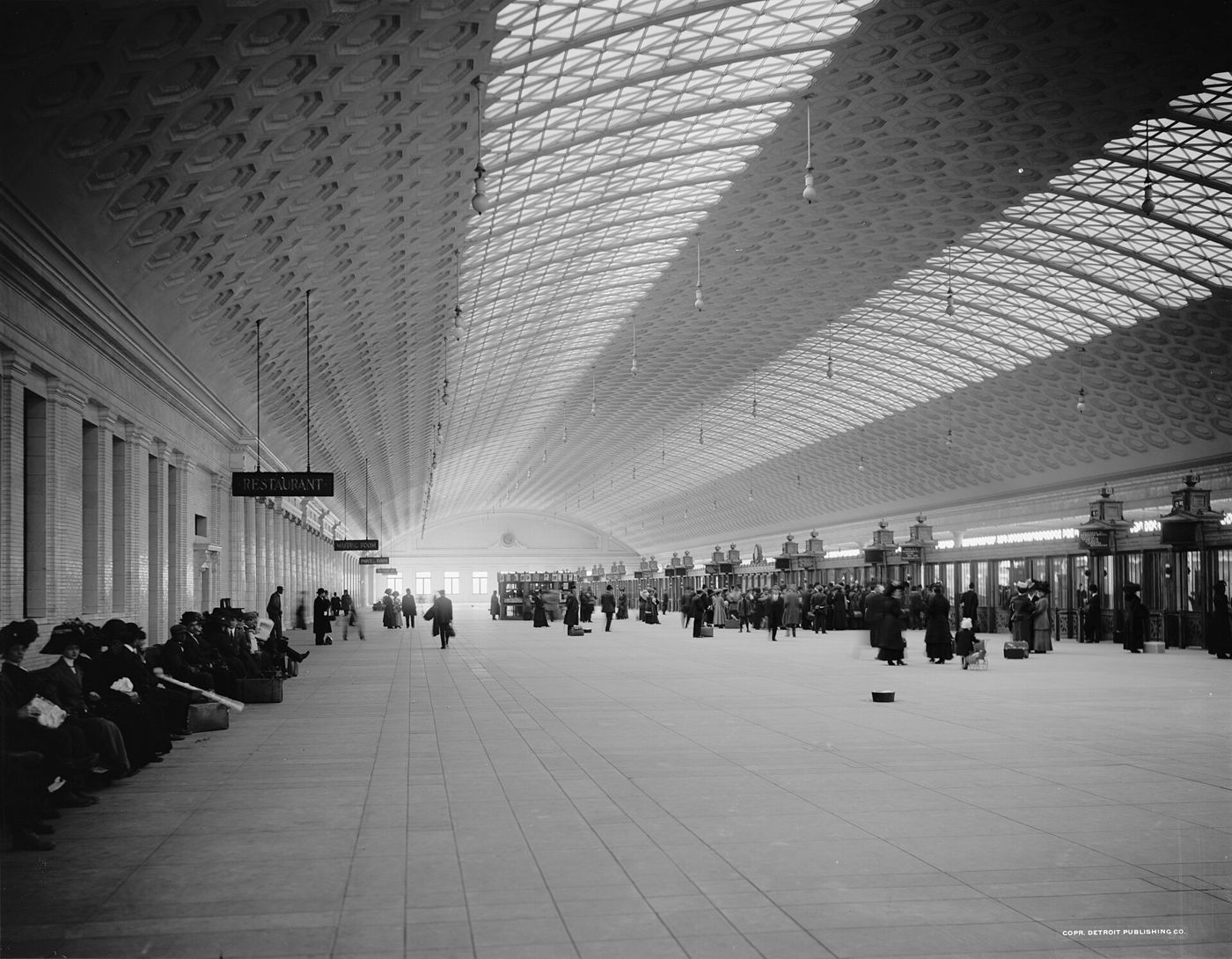
Detroit Publishing Company, Public domain
Gatsby “sprang from his Platonic conception of himself.” He makes his money in bootlegging, alongside a gambler who “fixed the World’s Series back in 1919.” And the last pages go back to the island that “flowered once for Dutch sailors’ eyes—a fresh, green breast of the new world.”
Marxist criticism
Who pays, who works, and how does the text hide it?
Money runs through every image. Daisy’s voice “is full of money,” Gatsby courts her with shirts, and his parties are a machine for spending. Myrtle is crushed between the rich and the garage. The dream promises that anyone can rise, and the book shows that the rich close ranks when someone does.
A song at Gatsby’s party says it plainly: “The rich get richer and the poor get—children.”
Opens a lot here
Where it falls short. It explains the money but not why the dream still moves Nick, and us, at the end.
Lionel Trilling, The Liberal Imagination (1950)
Field theory
How do artists earn prestige, and what do they give up for it?
Pierre Bourdieu showed that taste works as a class marker, a way of telling old money from new. The book’s map is made of it. East Egg is old money and West Egg, Nick says, is “the less fashionable of the two.” Gatsby has more money than Tom but the wrong car, the wrong shirts and the wrong phrase, “old sport.”
Tom calls him “Mr. Nobody from Nowhere.” In Bourdieu’s terms Gatsby has economic capital without the cultural capital that would let him keep Daisy.
Opens a lot here
Where it falls short. It explains why Gatsby loses but not why Nick thinks he is worth the whole bunch put together.
Pierre Bourdieu, Distinction (1979)
Critical race theory
Whose experience does the text treat as everyone’s, and who is left out?
Tom is reading The Rise of the Coloured Empires “by this man Goddard,” a stand-in for Lothrop Stoddard’s real book of 1920, and says “we’re Nordics.” At the Plaza he warns that next people will “have intermarriage between black and white.” Jordan answers, “We’re all white here.”
Walter Benn Michaels has argued that Tom’s suspicion of Gatsby, with his made-up name and uncertain origins, is also a question of whether Gatsby is quite white. The dream is open, the book suggests, only to people who are let into it.
Opens a lot here
Where it falls short. The book mocks Tom’s racism and also shares some of the period’s, so it doesn’t give a single clear position.
Walter Benn Michaels, Our America (1995)
New Historicism
How did the text get made, and how does it sit beside the other records of its time?
The book is set in 1922, during Prohibition, and Gatsby’s fortune comes from drugstores that sell liquor over the counter. Meyer Wolfshiem is based on Arnold Rothstein, who was widely believed to have fixed the 1919 World Series. Fitzgerald wrote most of it in France in 1924.
Seen from there, the American dream in the book is less a timeless idea than a portrait of a few years when the money was fast and the laws were openly broken.
Opens a lot here
Where it falls short. It tells you what the book drew on but not why it outlived its moment.
Matthew J. Bruccoli, Some Sort of Epic Grandeur (1981)
3 · The whole book · Daisy Buchanan
Why does Daisy stay with Tom?
Gyrofrog, Public domain
When her daughter was born, Daisy says, she hoped she would be a fool: “that’s the best thing a girl can be in this world, a beautiful little fool.” At the Plaza she tells Gatsby, “I did love him once—but I loved you too.” After the accident she goes back to Tom.
Feminist criticism
Whose voice, work and point of view does the text center, and whose does it use?
Daisy’s line about her daughter is a feminist reading inside the book. She knows what a woman of her class is for, and she knows that knowing it doesn’t help. In 1917 she couldn’t wait for Gatsby without money or family support, and in 1922 she can’t leave Tom without losing her place and her child.
Seen this way, she isn’t shallow. She is making the only safe choice she has.
Opens a lot here
Where it falls short. The book gives her little inner life, and the reading has to supply most of it.
Judith Fetterley, The Resisting Reader (1978)
Mimetic desire
Do we want things because someone close to us wants them?
René Girard said we desire through others. Fitzgerald says it outright about the young Gatsby in Louisville: “It excited him, too, that many men had already loved Daisy—it increased her value in his eyes.” The officers from Camp Taylor calling her house made her worth wanting.
At the Plaza the triangle closes. Gatsby needs Daisy to say she never loved Tom. The rivalry has become the point, and she can’t give him that.
Opens a lot here
Where it falls short. It explains Gatsby’s desire better than Daisy’s.
René Girard, Deceit, Desire and the Novel (1961)
Field theory
How do artists earn prestige, and what do they give up for it?
Daisy and Tom share a class, and Gatsby is outside it. When it counts they “retreated back into their money or their vast carelessness, or whatever it was that kept them together,” in Nick’s words. In Bourdieu’s terms, the habits they share are stronger than love.
Opens a lot here
Where it falls short. It treats Daisy as her class, which leaves out the woman who cried over Gatsby’s shirts.
Pierre Bourdieu, Distinction (1979)
Existentialism
Where does a person deny his own freedom so he won’t have to answer for it?
“I can’t help what’s past,” Daisy says. For Sartre the past can’t be changed, but what we make of it is always ours. Daisy uses the past to avoid choosing: she loved both, she can’t help it, and then the accident decides for her.
Some light
Where it falls short. It blames Daisy for a lack of freedom the feminist reading shows she really had.
Jean-Paul Sartre, Being and Nothingness (1943)
4 · The whole book · Jay Gatsby
Is Gatsby great?
Harris & Ewing, Public domain
Nick’s only compliment to him is shouted across the lawn: “They’re a rotten crowd. You’re worth the whole damn bunch put together.” At the end he says that “Gatsby turned out all right.” After Gatsby dies, his father shows Nick a schedule the boy wrote in 1906: “Rise from bed 6:00 a.m.”
Christian reading
What does the story share with scripture and Christian practice?
Nick says it himself: Gatsby “was a son of God—a phrase which, if it means anything, means just that—and he must be about His Father’s business, the service of a vast, vulgar, and meretricious beauty.” The words are Jesus’ at twelve, in the temple, in Luke 2.
The comparison is double-edged. Gatsby has a mission, faith and a kind of innocence, and his god is money and a woman. He also dies for other people’s sins: Daisy was driving.
Opens a lot here
Where it falls short. It can make Gatsby a martyr, when he was also a criminal who did business with Wolfshiem.
Luke 2:49
Platonism
What is the relation between an ideal and the real thing that copies it?
Gatsby “sprang from his Platonic conception of himself.” For Plato the real thing is the idea, and the world only copies it. Gatsby lives that way. James Gatz is the copy, and Jay Gatsby is the form he invented at seventeen.
The trouble is that Daisy is a person, not an idea. Nick says she “tumbled short of his dreams” because of “the colossal vitality of his illusion.” Gatsby’s greatness and his downfall are the same thing.
Opens a lot here
Where it falls short. Fitzgerald uses “Platonic” loosely, and the reading can claim more philosophy than the book has.
Plato, Republic, books 6–7
Masculinity studies
How do men measure themselves against a model of manhood?
The boyhood schedule, with its dumbbells, study and “Practise elocution, poise,” is straight out of the self-made man of American advice books, going back to Benjamin Franklin. Gatsby is that ideal carried all the way.
Tom is the other model of manhood, inherited and physical, with a “cruel body.” The book sets them against each other and lets the inherited one win.
Some light
Where it falls short. It explains the type but not the romance that makes Gatsby more than a type.
Michael Kimmel, Manhood in America (1996)
Recognition theory
What happens when people need to be seen and valued and aren’t?
Gatsby’s parties are open to everyone and no one knows him. Hundreds come, and almost no one comes to the funeral. Axel Honneth would see a man starved for real recognition and offered only crowds.
Some light
Where it falls short. Gatsby throws the parties for Daisy, not for the guests, so recognition isn’t really what he is after.
Axel Honneth, The Struggle for Recognition (1992)
5 · Chapter 2 · The valley of ashes
Who is watching in the valley of ashes?
Between West Egg and New York lies “a valley of ashes,” and above it an old billboard: “the eyes of Doctor T. J. Eckleburg,” whose “retinas are one yard high.” After Myrtle dies, her husband stares at the eyes and says, “God sees everything.” Michaelis tells him, “That’s an advertisement.”
Christian reading
What does the story share with scripture and Christian practice?
Wilson sees the eyes as God, and the book half agrees: they watch over the affair, the accident and the grief. But they look “out of no face,” and the oculist who put them up “sank down himself into eternal blindness, or forgot them and moved away.”
The Christian reading gets a God who is an abandoned advertisement, watching and doing nothing. Wilson acts on his faith by killing the wrong man.
Opens a lot here
Where it falls short. It explains Wilson’s view, which the book shows is a mistake.
Psalm 139
Ecocriticism
How does the text treat weather, land and the world that isn’t human?
The valley is real: the Corona ash dumps in Queens, where the city’s coal ash and garbage were piled into hills. Fitzgerald calls it “a fantastic farm where ashes grow like wheat.” The site was later cleared for the 1939 World’s Fair and is now Flushing Meadows–Corona Park.
The book puts the people who live with the waste, the Wilsons, at the center of its tragedy. The ash is what the parties leave behind.
Opens a lot here
Where it falls short. Fitzgerald is more interested in the valley as a symbol than as a place, and the reading has to bring in outside history.
Lawrence Buell, The Environmental Imagination (1995)
Marxist criticism
Who pays, who works, and how does the text hide it?
The valley is where the working class lives in the book. Wilson runs a garage and is “spiritless” and “anaemic.” Tom takes his wife, and dangles a car sale in front of him. The rich drive through on their way to the city and don’t stop.
When the Buchanans’ car kills Myrtle, the book’s class order works out exactly: the rich escape, the poor die, and the man who works in the ash takes the blame for it.
Opens a lot here
Where it falls short. Fitzgerald’s working people are thin characters, so the theory has more to say about the system than about them.
Terry Eagleton, Marxism and Literary Criticism (1976)
Deconstruction
Where does the text undo what it claims?
The eyes are a sign whose meaning has gone. They advertised a doctor who is gone, and now they mean whatever a viewer brings: God to Wilson, nothing to Michaelis, a symbol to readers. Deconstruction would say all signs work like this, and the billboard makes it visible.
Some light
Where it falls short. It leaves you with the instability, which the book has already shown.
Jacques Derrida, Of Grammatology (1967)
6 · Chapter 5 · Tea at Nick’s
Why does the green light lose its meaning?
Unknown photographer, Public domain
Once Gatsby has Daisy beside him, Nick thinks that “the colossal significance of that light had now vanished forever.” “Now it was again a green light on a dock. His count of enchanted objects had diminished by one.” In the same chapter Daisy weeps into his shirts: “It makes me sad because I’ve never seen such—such beautiful shirts before.”
Psychoanalytic criticism
What does the text do with a wish or a loss it can’t face directly?
Jacques Lacan argued that desire is never satisfied by what it gets, because what it wanted was the lack itself. The green light works only at a distance. When Daisy is in the room, it becomes a lamp on a dock.
Nick sees it the same afternoon. There must have been moments “when Daisy tumbled short of his dreams.” Getting what he wanted is the first loss.
Opens a lot here
Where it falls short. It is a powerful key, which is a reason to be wary: Lacan can explain any novel about longing the same way.
Jacques Lacan, Écrits (1966)
Marxist criticism
Who pays, who works, and how does the text hide it?
Marx described commodity fetishism: objects seem to carry a magic that really comes from the social relations behind them. The shirts scene shows it. Gatsby throws his shirts in a heap, and Daisy cries, as though the shirts were the five years.
The green light is a fetish of the same kind. Distance gave it the magic, and closeness takes it away.
Opens a lot here
Where it falls short. It explains the shirts better than the light.
Karl Marx, Capital, volume 1 (1867), chapter 1
New Criticism
What do the words on the page do, apart from the author’s life?
Follow the images through the chapter. The day is “pouring rain.” Gatsby leans his head against “a defunct mantelpiece clock” and nearly knocks it off. Later he announces, like a weatherman, “It’s stopped raining,” and at the end Nick goes out “into the rain, leaving them there together.” The weather and the stopped clock carry what the dialogue can’t.
The green light is the chapter’s last turn of the screw. The image that carried the first chapter is quietly put down.
Opens a lot here
Where it falls short. It sees the craft and says less about why the loss of one light hurts so much.
Cleanth Brooks, The Well Wrought Urn (1947)
Platonism
What is the relation between an ideal and the real thing that copies it?
For Plato every real thing falls short of its idea. Daisy in Nick’s parlor is a copy of the Daisy Gatsby has been building for five years, and the copy can’t win.
Some light
Where it falls short. It repeats the point of the question about whether Gatsby is great.
Plato, Republic, book 10
7 · Chapter 7 · The Plaza Hotel
Who wins at the Plaza?
Ewing Galloway, Public domain
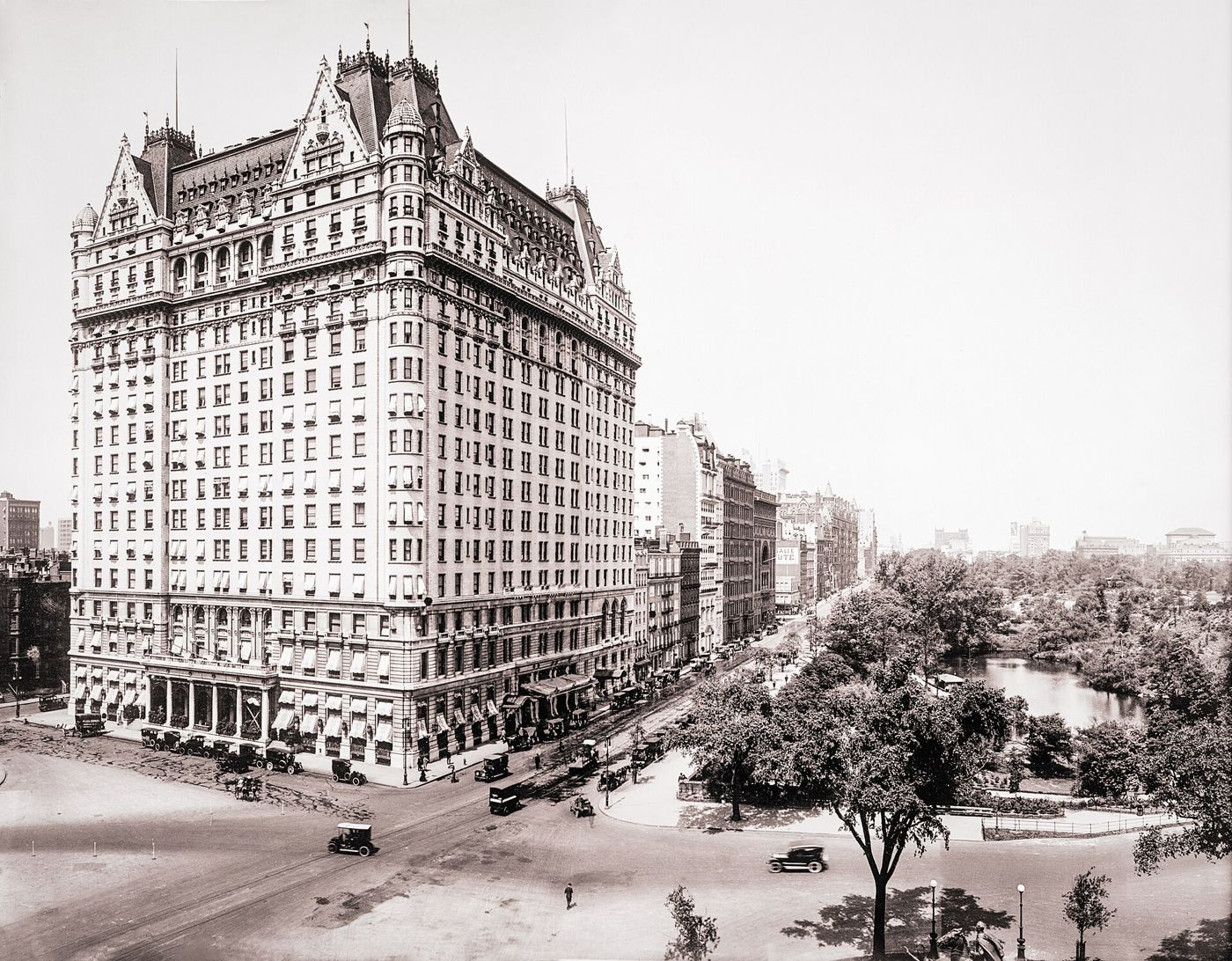
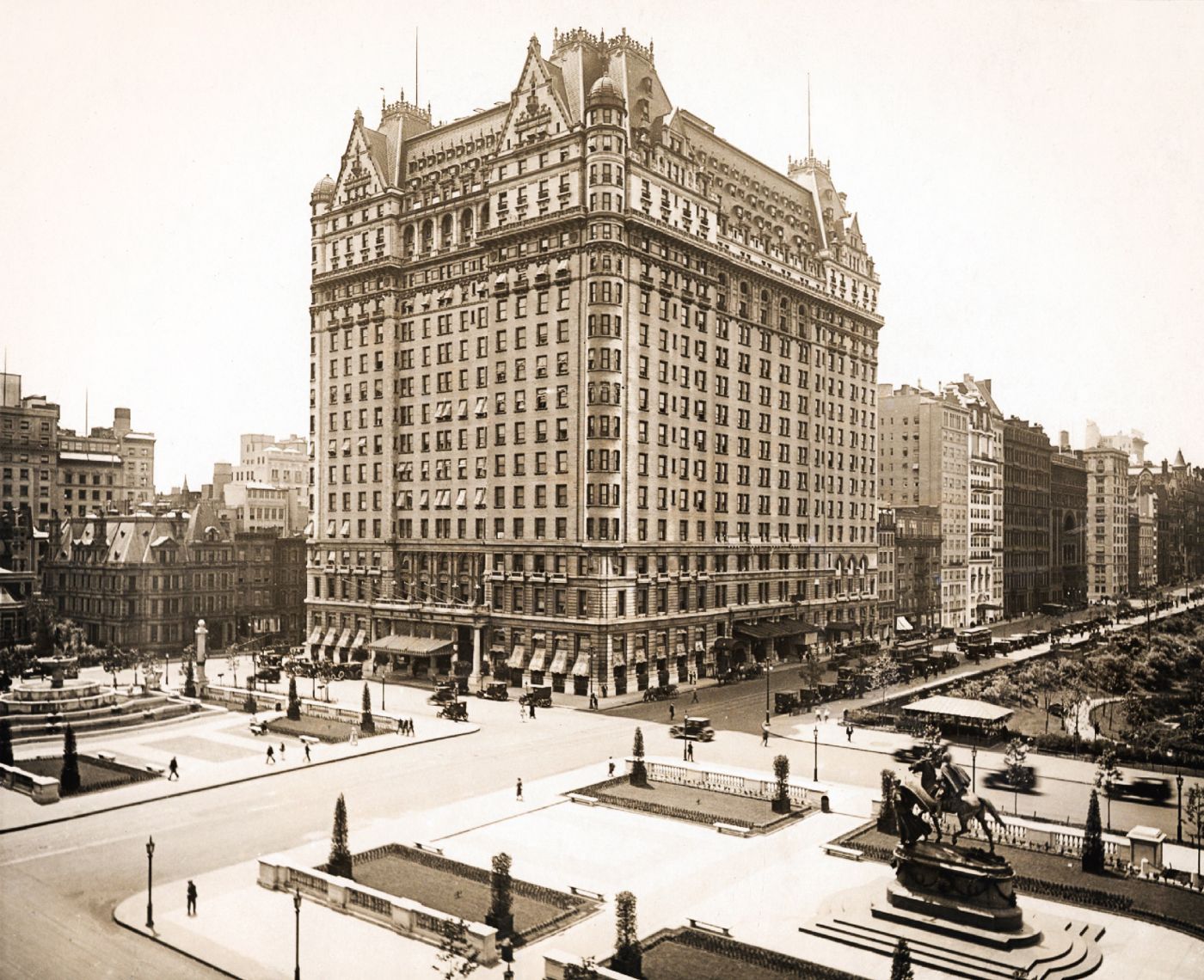
On the hottest day of the summer they take a suite at the Plaza. Tom calls Gatsby “Mr. Nobody from Nowhere” and warns about “intermarriage between black and white.” Gatsby asks Daisy to say she never loved Tom. She can’t. They drive home in separate cars, and it is Nick’s thirtieth birthday.
Field theory
How do artists earn prestige, and what do they give up for it?
Tom wins with information and class. He has looked into Gatsby’s drugstores and says so in front of everyone. And he wins with ease: he can be crude because his place is secure. Gatsby has to be perfect and can’t be.
Bourdieu would say the scene shows how class works under pressure. The one who belongs doesn’t have to try.
Opens a lot here
Where it falls short. It explains Tom’s win, not why Daisy’s “I loved you too” lands so hard.
Pierre Bourdieu, Distinction (1979)
Critical race theory
Whose experience does the text treat as everyone’s, and who is left out?
Tom moves straight from Gatsby to race. He links a man without a family to the end of family life and then to “intermarriage between black and white.” Jordan’s answer, “We’re all white here,” is a joke and a reminder.
In Tom’s mind Gatsby threatens the same wall that race does. The scene shows how class and race were policed together.
Opens a lot here
Where it falls short. The book gives no Black character a voice here or anywhere, so the reading works from Tom’s side.
Walter Benn Michaels, Our America (1995)
Masculinity studies
How do men measure themselves against a model of manhood?
Two men fight over a woman in front of her, and neither asks what she wants. Tom plays the wronged husband, Gatsby the true love, and Daisy has to choose in public between two versions of male pride.
Opens a lot here
Where it falls short. It sees the men clearly and leaves Daisy where the scene leaves her.
R. W. Connell, Masculinities (1995)
The civilizing process
How do self-control and shame sort people into higher and lower?
The word “self-control” comes up twice in the chapter. Tom’s hand trembles “with his effort at self-control” before they leave, and at the Plaza Daisy begs him, “Please have a little self-control.” He throws it back at her with contempt. Elias showed that self-control is what marks the well-born off from the rest. The irony is that Tom, the aristocrat, is the one who loses it, and he wins anyway.
Some light
Where it falls short. The irony is the whole insight. Elias doesn’t add much beyond it.
Norbert Elias, The Civilizing Process (1939)
8 · Chapter 9 · The last page
What does the ending ask us to believe?
Scan by NYPL, Public domain
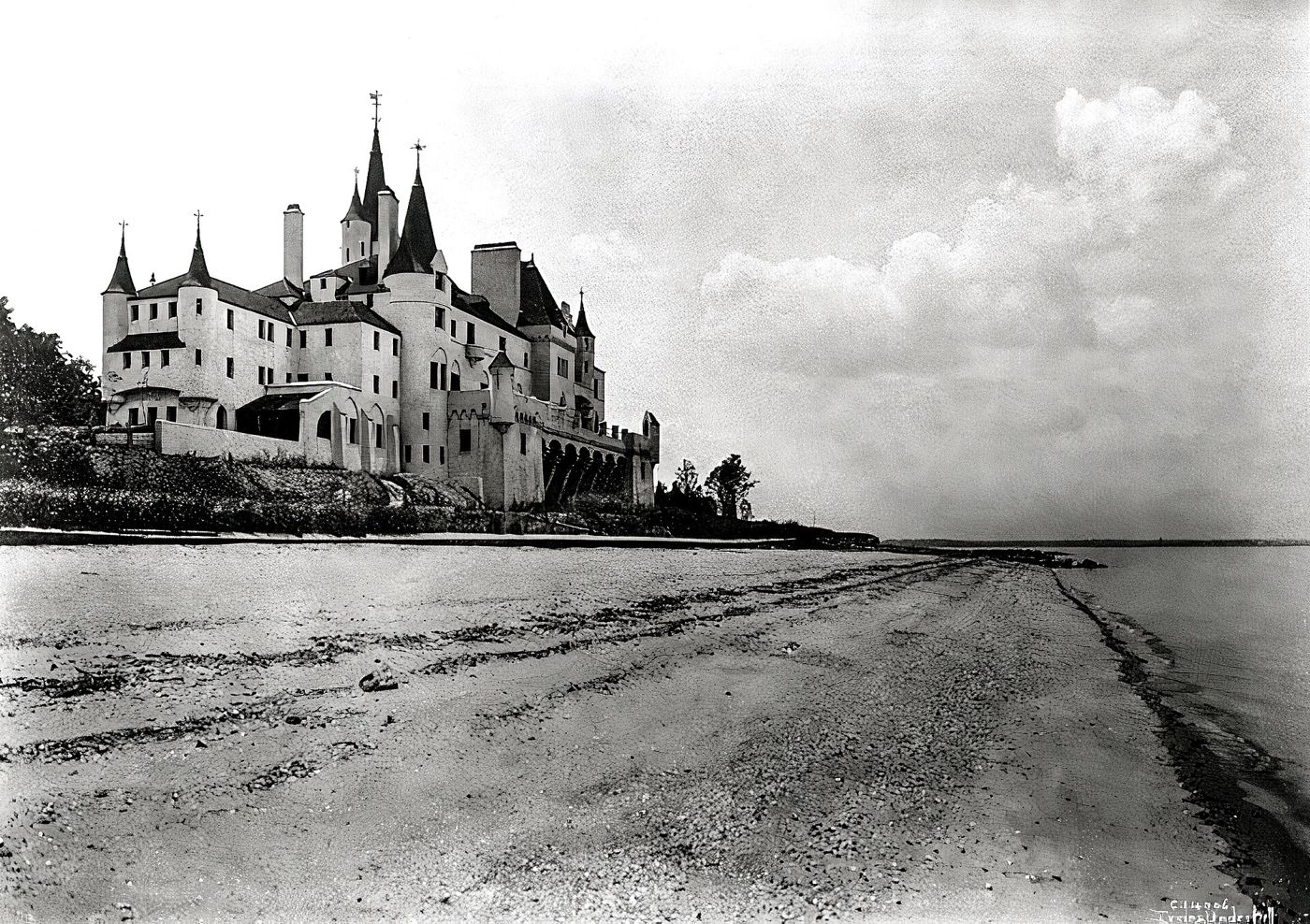
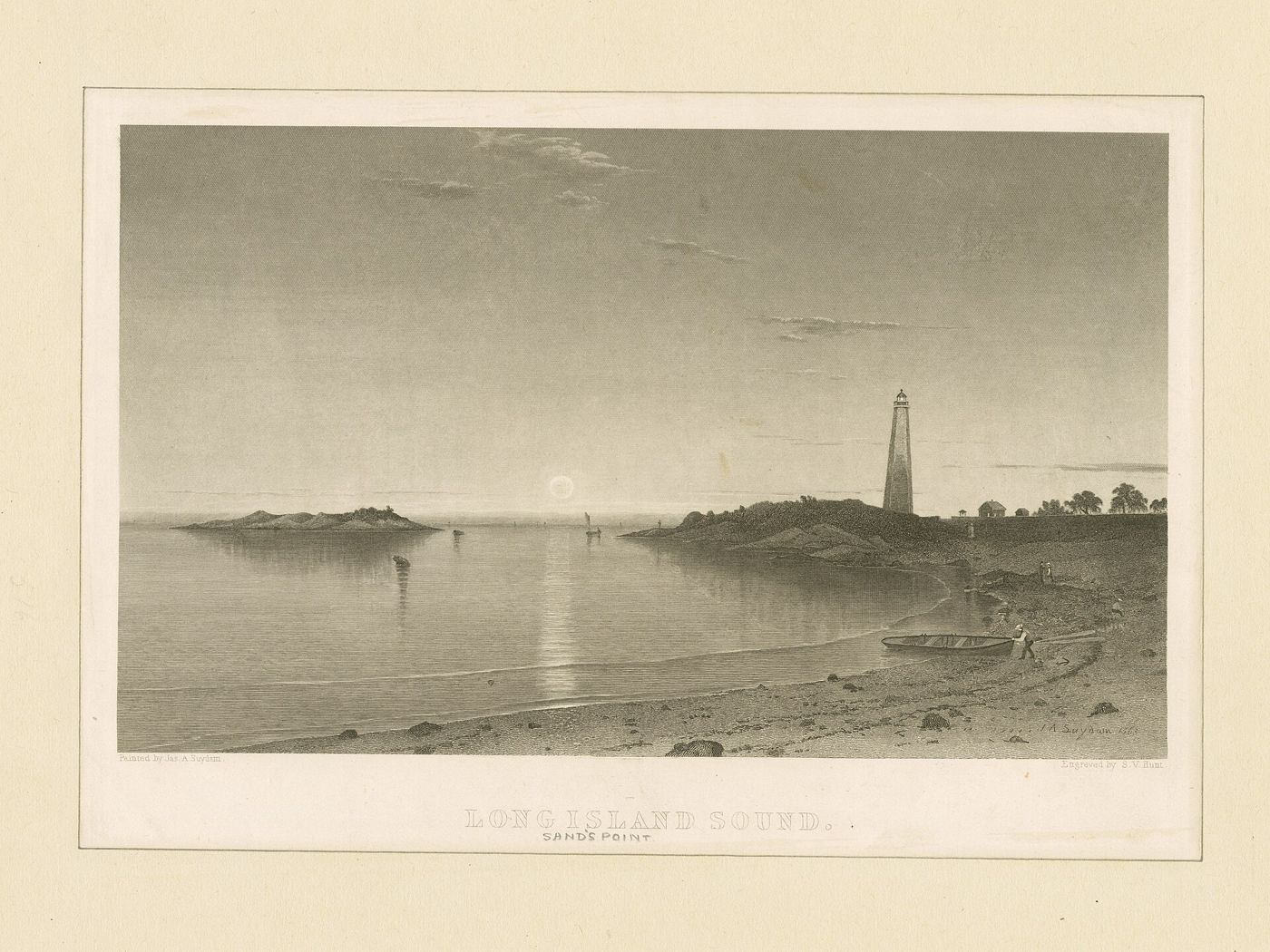
On his last night in West Egg, Nick lies on Gatsby’s beach and thinks of the island that “flowered once for Dutch sailors’ eyes—a fresh, green breast of the new world.” The book ends: “So we beat on, boats against the current, borne back ceaselessly into the past.”
Postcolonial criticism
What does the text do with conquest, and with the people it displaced?
The ending makes the arrival of European sailors into a moment of pure wonder, “the last and greatest of all human dreams.” A postcolonial reading notices what that leaves out: the people already living on the island, and what the Dutch came for.
The land is pictured as a woman’s body, “a fresh, green breast,” waiting to be seen. Gatsby’s dream of Daisy and the sailors’ dream of the continent are drawn as the same kind of desire.
Opens a lot here
Where it falls short. It can read the passage only as conquest and miss the grief in it.
Annette Kolodny, The Lay of the Land (1975)
The absurd
How do people live when the world gives no meaning back?
Camus imagined Sisyphus happy, pushing the rock up the hill forever. Nick’s last sentence is close: we beat on against the current, and are carried back anyway. There is no promise we will arrive.
But Nick also says “tomorrow we will run faster, stretch out our arms further.” The ending holds hope and futility at once, which is about as close to Camus as an American novel of 1925 gets.
Opens a lot here
Where it falls short. Camus wrote seventeen years later, and the reading can make Fitzgerald sound more philosophical than he is.
Albert Camus, The Myth of Sisyphus (1942)
Reader-response
What does the reader bring, and what does the text leave for the reader to fill in?
Watch the pronouns. The book has been “I” for nine chapters, and on the last page it turns into “we” and “us.” The reader is pulled into the boat. Whatever Gatsby wanted, the ending says, you want something like it too.
Some light
Where it falls short. It explains why the ending is quoted so often, not whether it is true.
Wolfgang Iser, The Implied Reader (1972)
New Historicism
How did the text get made, and how does it sit beside the other records of its time?
Nick goes back West, to the “Middle West” of his Christmas trains home from school. Fitzgerald, from St. Paul, wrote the ending in France. Read historically, the last page is an expatriate’s idea of America, seen from far away and in the past tense.
Some light
Where it falls short. It locates the feeling but doesn’t explain it.
Matthew J. Bruccoli, Some Sort of Epic Grandeur (1981)