Eight questions about the book, four about the whole of it and four about single chapters. Each one is answeredfour ways, through a literary theory or an idea from philosophy, sociology, psychology or religion.
The answers don’t always agree. Some theories open a question up and some have little to say about it, and each answer says which. Swipe or use the arrows to move between them.
Bigger smothers Mary with a pillow to keep her blind mother from finding him in the room. He then burns the body in the furnace, writes a ransom note, and kills Bessie. His lawyer, Max, argues that the city and its color line made him. At the end Bigger says something Max can’t bear to hear: “But what I killed for, I am!”
Marxist criticism
Who pays, who works, and how does the text hide it?
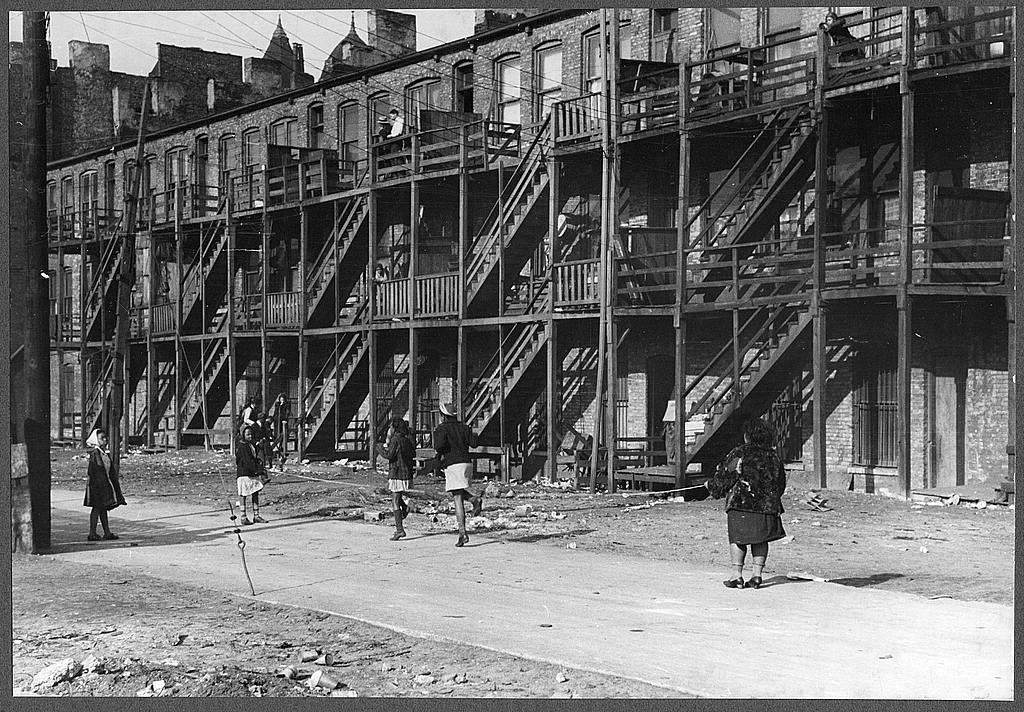
This is Max’s reading, and the novel gives it a whole section of Book Three. Mr. Dalton gives money to Black charities and ping-pong tables to the South Side Boys’ Club, and his company rents the Thomases one rat-infested room for eight dollars a week. Bigger learns this from a sign: THIS PROPERTY IS MANAGED BY THE SOUTH SIDE REAL ESTATE COMPANY.
In this reading Mary dies in a trap built long before Bigger entered her room, out of housing, jobs and fear.
Opens a lot here
Where it falls short. Bigger himself rejects it at the end. He doesn’t want to be explained.
Richard Wright, “How ‘Bigger’ Was Born” (1940); Terry Eagleton, Marxism and Literary Criticism (1976)
Existentialism
Where does a person deny his own freedom so he won’t have to answer for it?
After the murder Bigger feels something new: “He had murdered and had created a new life for himself. It was something that was all his own.” For Sartre, a person is what he does. Bigger, who has been told all his life what he can’t do, discovers that he has acted.
His last words to Max push this to the edge: “What I killed for must’ve been good!” He refuses to be only a victim, and the price of that refusal is owning the killings.
Opens a lot here
Where it falls short. It can make murder sound like self-discovery, which is exactly what horrifies Max.
Jean-Paul Sartre, Existentialism Is a Humanism (1946)
Critical race theory
Whose experience does the text treat as everyone’s, and who is left out?
Critical race theory looks at how law and institutions build race into everyday life. Chicago’s color line runs through the whole book: Gus points across it to Cottage Grove; the newspapers print a map of the South Side shaded where police have searched every Black home; the prosecutor calls Mary’s death a rape though nothing in the book shows one.
Before any trial begins, Bigger has been convicted by the city’s idea of him.
Opens a lot here
Where it falls short. It explains the city’s verdict better than Bigger’s own choices.
Arnold R. Hirsch, Making the Second Ghetto: Race and Housing in Chicago (1983)
Christian reading
What does the story share with scripture and Christian practice?
His mother’s pastor, Reverend Hammond, visits his cell, prays, and hangs a wooden cross around his neck. A Christian reading would look for repentance and grace. The novel offers neither. Bigger throws the cross away after he sees one burning on a roof.
At the end he tells Max, “I ain’t asking for nobody to forgive me.”
Little to work with
Where it falls short. The book stages a Christian answer only to refuse it.
Romans 3:23
2 · The whole book · Book Three, “Fate”
Is Max right?
Book Three turns from Bigger’s mind to the courtroom. Max pleads guilty for him and argues for hours that America made Bigger Thomas: “Night after night, I have lain without sleep, trying to think of a way to picture to you and to the world the causes and reasons why this Negro boy sits here a self-confessed murderer.”
Genre theory
What rules does the genre set up, and what happens when the book breaks them?
James Baldwin, who admired Wright, argued in “Everybody’s Protest Novel” (1949) and “Many Thousands Gone” (1951) that the protest novel, however angry, reduces its hero to a social category. Max’s speech is the protest novel speaking its thesis out loud.
Baldwin’s complaint is that Bigger becomes an example rather than a person. Book Three is where readers have most often felt this.
Opens a lot here
Where it falls short. The book seems to know it: Bigger’s last scene with Max undoes the speech.
James Baldwin, “Many Thousands Gone” (1951)
Marxist criticism
Who pays, who works, and how does the text hide it?
Max is a Communist lawyer, and his speech is close to Wright’s own politics in 1940. He asks the court to see Bigger as one of millions, made by a system the court itself belongs to, and warns that executing him won’t end what made him.
Read this way, Max is right about the city and powerless in the courtroom. The judge sentences Bigger to death.
Opens a lot here
Where it falls short. Max is right about everything except Bigger, who tells him something at the end he can’t accept.
Richard Wright, “How ‘Bigger’ Was Born” (1940)
Feminist criticism
Whose voice, work and point of view does the text center, and whose does it use?
Max says it himself: “Bigger Thomas is not here on trial for having murdered Bessie Mears.” Bessie, a Black woman Bigger raped and killed, appears in court only as evidence, her body shown at the inquest to inflame the crowd about Mary.
Max argues that she was “largely omitted from the consciousness of Bigger Thomas.” A feminist reading notices that she is largely omitted from the defense too.
Opens a lot here
Where it falls short. Max does name the injustice. The book sees what the court doesn’t, which complicates the charge against it.
Kimberlé Crenshaw, “Mapping the Margins” (1991)
Reader-response
What does the reader bring, and what does the text leave for the reader to fill in?
Wright said that after his first book he had written something “which even bankers’ daughters could read and weep over and feel good about,” and swore the next would be “so hard and deep that they would have to face it without the consolation of tears.” Book Three denies the reader the courtroom rescue the genre promises.
Some light
Where it falls short. It explains the design, not whether the long speech still works on readers today.
Wolfgang Iser, The Implied Reader (1972); Richard Wright, “How ‘Bigger’ Was Born” (1940)
3 · The whole book · Mrs. Dalton, Mary and Jan
Why is everyone blind?
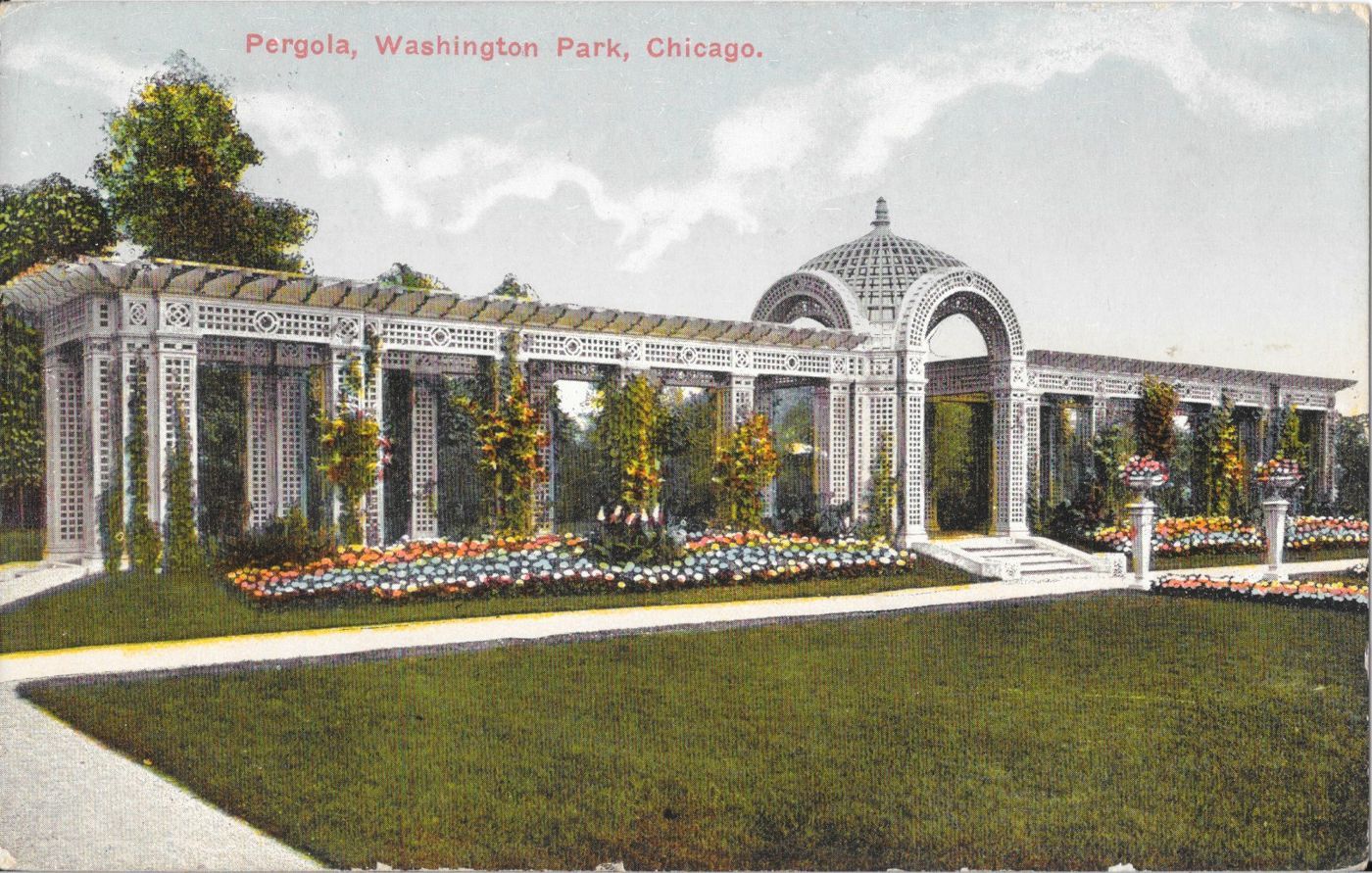
Gerson Bros., public domain
Mrs. Dalton is blind. Mary tells Bigger, “Never in my life have I been inside of a Negro home.” After the murder Bigger thinks white people “were blind to what did not fit.” And Max tells the court that “in our blindness we have so contrived and ordered the lives of men” that this happened.
New Criticism
What do the words on the page do, apart from the author’s life?
Follow the image. Mrs. Dalton’s blindness causes the murder: she comes into the room and Bigger panics, afraid she will sense him. Snow covers the city in Book Two, white over everything. The Daltons’ charity looks at Bigger and doesn’t see him.
Blindness is the novel’s central metaphor, and it runs both ways: Bigger is blind too, to Bessie, to Jan.
Opens a lot here
Where it falls short. It finds the pattern but not why it matters so much to Wright.
Cleanth Brooks, The Well Wrought Urn (1947)
Double consciousness
What is it like to see yourself always through the eyes of others?
W. E. B. Du Bois described double consciousness, “this sense of always looking at one’s self through the eyes of others.” Bigger lives inside it. In the Dalton house he says “Yessuh” and watches himself say it. He can’t act naturally, because he is always seen, or not seen, as something else.
Opens a lot here
Where it falls short. Du Bois described a divided self. Bigger, after the murder, feels whole for the first time, which goes past him.
W. E. B. Du Bois, The Souls of Black Folk (1903)
Postcolonial psychology
What does being looked at, and judged, by the dominant group do to a person?
Frantz Fanon wrote about being fixed by the white gaze, turned into an object by a look. Mary and Jan want to be his friends. Jan shakes his hand and tells him not to say “sir,” and they have him sit and eat with them at Ernie’s. Bigger feels it as another kind of exposure: “He felt he had no physical existence at all right then.”
Opens a lot here
Where it falls short. It makes Mary and Jan’s kindness sound like aggression, and the book is more divided about them than that.
Frantz Fanon, Black Skin, White Masks (1952)
Recognition theory
What happens when people need to be seen and valued and aren’t?
Honneth argues that people need to be recognized as equals. Jan is the one character who finally offers it. He visits the jail and tells Bigger, “I’m not angry and I want you to let me help you.” Bigger is moved and unsure what to do with it.
Some light
Where it falls short. Recognition comes too late to change anything, and the theory has little to say about that.
Axel Honneth, The Struggle for Recognition (1992)
4 · The whole book · The novel and its history
Which Native Son are we reading?
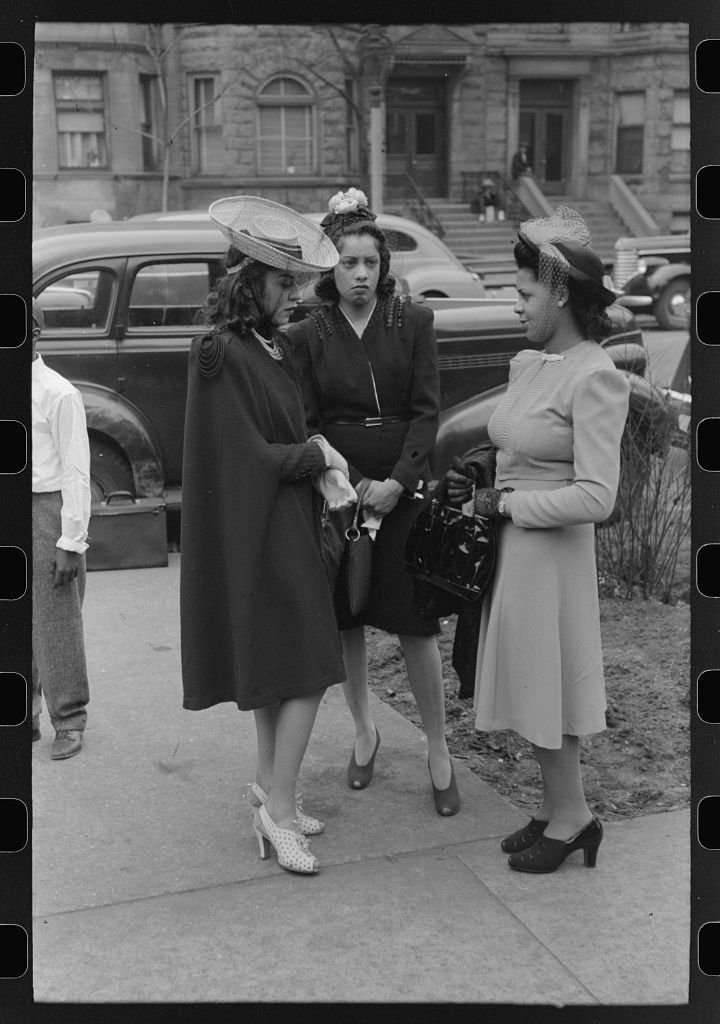
Russell Lee, 1941, public domain
In 1940 the Book-of-the-Month Club took the novel on condition that Wright cut passages, including the scene in the movie theater and parts of Bigger and Mary’s night together. The Library of America restored them in 1991. Wright also wrote an essay, “How ‘Bigger’ Was Born,” about the boys he grew up with who became Bigger.
New Historicism
How did the text get made, and how does it sit beside the other records of its time?
A historical reading starts with the cuts. The first readers met a Bigger whose sexuality and Mary’s were softened; the restored text is blunter about both, and about what the white world fears. The most famous Black novel of its time reached its audience only after a book club made it safer.
Wright’s essay adds the other history: Bigger is drawn from boys he knew in Mississippi and Chicago, and from news coverage of a real Chicago case.
Opens a lot here
Where it falls short. It explains what changed between editions, not which version is the better book.
Arnold Rampersad, introduction to Native Son: The Restored Text (1991)
Genre theory
What rules does the genre set up, and what happens when the book breaks them?
Native Son is naturalism, the tradition of Zola and Dreiser that shows people driven by environment and instinct. Wright admired Dreiser, and Bigger’s path, a poor young man, a rich girl, a death, a trial, follows the outline of An American Tragedy (1925).
The difference is race. Clyde Griffiths can almost pass into the world he wants. Bigger can’t even cross Cottage Grove Avenue.
Opens a lot here
Where it falls short. Naturalism can make Bigger a specimen. Wright works against that in Bigger’s inner life.
Theodore Dreiser, An American Tragedy (1925)
Reader-response
What does the reader bring, and what does the text leave for the reader to fill in?
“How ‘Bigger’ Was Born” is a reader-response essay in reverse. Wright says he wrote to deny white readers the comfort of tears. Every choice in the book follows: no sympathetic crime, no innocent hero, no last-minute rescue.
Opens a lot here
Where it falls short. Readers still weep at the end, which suggests the plan only half worked.
Richard Wright, “How ‘Bigger’ Was Born” (1940)
Intertextuality
What other books is this one talking to?
The book is in conversation with Crime and Punishment as well as Dreiser: a young man kills, feels freed, is hunted, confesses. But Raskolnikov ends in repentance and love. Bigger ends with “I ain’t asking for nobody to forgive me.”
Some light
Where it falls short. Useful as a comparison; the book doesn’t point to Dostoevsky itself.
Fyodor Dostoevsky, Crime and Punishment (1866)
5 · Book One · The opening
Why does the novel open with a rat?
“Brrrrrrriiiiiiiiiiiiiiiiiiinng!” An alarm clock wakes a family of four in one room. A huge black rat runs across the floor, and Bigger corners it behind a trunk and kills it with a skillet while his mother and sister scream.
New Criticism
What do the words on the page do, apart from the author’s life?
The first scene is the whole book in small. A creature is trapped in a room, cornered, fights back, and is killed while people watch. At the end of Book Two Bigger is trapped on a rooftop, cornered, fighting back, with a crowd below.
Wright plants the image before we know Bigger, so the ending is already inside the opening.
Opens a lot here
Where it falls short. It sees the symmetry but stops short of what the comparison says about how the city sees Bigger.
Cleanth Brooks, The Well Wrought Urn (1947)
Marxist criticism
Who pays, who works, and how does the text hide it?
The rat is there because the building is bad, and the building is bad because it pays. Later Bigger learns that Mr. Dalton’s company owns it: “He paid eight dollars a week for one rat-infested room.” The rat is property relations with teeth.
Opens a lot here
Where it falls short. It explains why the rat is there, not why the scene is so physically frightening.
Friedrich Engels, The Condition of the Working Class in England (1845)
Genre theory
What rules does the genre set up, and what happens when the book breaks them?
Naturalism likes the animal comparison: people as creatures driven by hunger and fear in a hostile environment. Bigger killing the rat is predator and prey at once.
Opens a lot here
Where it falls short. The comparison is the danger the book runs: the prosecutor and the papers will call Bigger an animal too.
Émile Zola, “The Experimental Novel” (1880)
The poetics of space
How do rooms and shelters shape the imagination?
For Bachelard a house is where the imagination shelters. The Thomases’ one room gives no shelter: the boys must turn their heads while the women dress, and the rat lives with them. A home without privacy or safety is the starting point for everything Bigger does.
Some light
Where it falls short. Bachelard wrote about intimate, protected spaces, so here he mostly describes what is missing.
Gaston Bachelard, The Poetics of Space (1958)
6 · Book One · The Regal Theater
What do the movies teach Bigger?
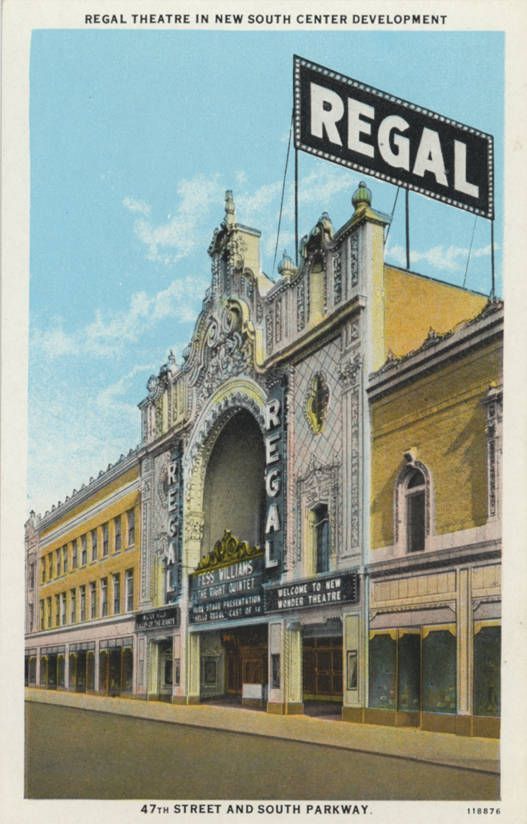
Unknown photographer, 1928, public domain
Bigger and Jack go to the Regal at Forty-seventh and South Parkway to see Trader Horn. A newsreel shows Mary Dalton, the daughter of the man Bigger is about to work for. Watching the African scenes, Bigger’s mind turns to “white men and women dressed in black and white clothes, laughing, talking, drinking and dancing.”
The culture industry
How do movies and mass media shape what people want?
Theodor Adorno and Max Horkheimer described the culture industry as a machine that shapes what audiences want. The Regal feeds Bigger two pictures: Africans as savages, and rich white people at play. He takes the second as a promise. He decides the Daltons’ world is where “he’d get the dope, the low-down.”
Opens a lot here
Where it falls short. It treats Bigger as a passive consumer, and the scene shows him using the films for his own fantasies.
Theodor Adorno and Max Horkheimer, Dialectic of Enlightenment (1944)
Mimetic desire
Do we want things because someone close to us wants them?
Girard said we desire through models. Bigger’s first image of Mary is on a screen, in a newsreel about a rich girl and a radical. His idea of her, and of what her world could give him, is borrowed from the movies before he ever meets her.
Opens a lot here
Where it falls short. Bigger doesn’t desire Mary so much as fear and resent her, which the theory can miss.
René Girard, Deceit, Desire and the Novel (1961)
Postcolonial psychology
What does being looked at, and judged, by the dominant group do to a person?
Trader Horn shows Africans as “naked black men and women whirling in wild dances.” Fanon wrote about Black audiences learning to see themselves through such images. Bigger watches and turns away in his mind from the screen to the white world, as if there were nowhere on it for him.
Opens a lot here
Where it falls short. The novel gives only a sentence to his reaction, so the reading fills in a lot.
Frantz Fanon, Black Skin, White Masks (1952)
New Historicism
How did the text get made, and how does it sit beside the other records of its time?
This is the scene the Book-of-the-Month Club cut in 1940. In the restored text Bigger and Jack masturbate in the dark theater before the films begin. The prosecutor later brings the theater manager to court to describe it, as proof of depravity.
Knowing the history, you see the novel being edited by the same respectability it shows working against Bigger.
Opens a lot here
Where it falls short. It tells you about the book’s history more than about the scene’s meaning.
Arnold Rampersad, introduction to Native Son: The Restored Text (1991)
7 · Book Two · Michigan Avenue and Thirty-sixth Place
Why does Bessie’s death count for so little?
Bessie begs: “Bigger, honey, I’d run off with you. I’d work for you, baby. We don’t have to do this.” He drags her through the snow to an empty building, rapes her, kills her with a brick, and drops her body down an air shaft. At the inquest her body is shown to the crowd as evidence about Mary.
Feminist criticism
Whose voice, work and point of view does the text center, and whose does it use?
Bessie works long hours in white kitchens and drinks to forget them. She is the only person who loves Bigger, and the novel lets him kill her in a few pages and then nearly forget her. A feminist reading insists on her.
Black feminist critics have pointed out that the novel, like the court, treats a Black woman’s death as a footnote to a white woman’s.
Opens a lot here
Where it falls short. Max says this in the novel. The book may be indicting the indifference it shows.
Kimberlé Crenshaw, “Mapping the Margins” (1991)
Critical race theory
Whose experience does the text treat as everyone’s, and who is left out?
Max puts the question in court: “Does not the life of a Negro girl mean as much in the eyes of the law as the life of a white girl? Yes; perhaps, in the abstract.” The law values victims by race. Bessie’s body becomes useful to the state only as a way to prove what Bigger must have done to Mary.
Opens a lot here
Where it falls short. It explains the court’s view, not Bigger’s, which the book also wants us to see.
Derrick Bell, Race, Racism and American Law (1973)
Kantian aesthetics
Can beauty be enjoyed without wanting anything from it?
Kant’s second formulation says never to treat a person merely as a means. Bigger uses Bessie for the ransom plan and then kills her because she knows too much: “He had to have a girl, so he had Bessie,” Max says. She is a means from start to finish.
Opens a lot here
Where it falls short. Kant judges the act clearly and has nothing to say about why Bigger can’t see her.
Immanuel Kant, Groundwork of the Metaphysics of Morals (1785)
Christian reading
What does the story share with scripture and Christian practice?
Bessie is the novel’s suffering servant: she prays, she pleads, she is killed for someone else’s sin. A Christian reading sees in her the innocent victim the book doesn’t mourn.
Some light
Where it falls short. The novel gives her no redemption and no voice after death, so the reading adds what the text holds back.
Isaiah 53
8 · Book Three · The last page
What does Bigger mean by “What I killed for, I am”?
Days before his execution Bigger tries to tell Max what he has understood. “I didn’t want to kill!” Bigger shouted. “But what I killed for, I am! It must’ve been pretty deep in me to make me kill!” Max backs away. The novel ends with Bigger smiling “a faint, wry, bitter smile” as the steel door clangs shut.
The absurd
How do people live when the world gives no meaning back?
Albert Camus’s The Stranger (1942) ends with a condemned man who finally accepts his life just before his execution. Bigger’s last scene has the same shape: alone, condemned, refusing the consolations offered him, he claims his life as his own.
The difference is that Bigger’s acceptance comes through rage at a world that “wouldn’t let me live.”
Opens a lot here
Where it falls short. Camus’s Meursault is indifferent; Bigger is anything but, and the comparison can blur that.
Albert Camus, The Stranger (1942)
Postcolonial psychology
What does being looked at, and judged, by the dominant group do to a person?
In The Wretched of the Earth (1961) Fanon argued that the colonized can come to feel violence as the moment of becoming a person. Bigger says it before Fanon did: “I didn’t know I was really alive in this world until I felt things hard enough to kill for ’em.”
Opens a lot here
Where it falls short. Fanon wrote about collective revolt. Bigger’s violence is private and kills a Black woman as well as a white one.
Frantz Fanon, The Wretched of the Earth (1961)
Christian reading
What does the story share with scripture and Christian practice?
The last pages answer every Christian expectation with no. Bigger threw away the cross. He says, “I ain’t trying to forgive nobody and I ain’t asking for nobody to forgive me.” A religious reading sees a soul refusing grace; a gentler one sees a man who won’t accept a forgiveness offered on someone else’s terms.
Opens a lot here
Where it falls short. It reads the scene through what Bigger refuses rather than what he claims.
Luke 23:39–43
Marxist criticism
Who pays, who works, and how does the text hide it?
Max came to explain Bigger as a product of the system. What he hears is Bigger claiming the killings as his own meaning, and he backs away. The last scene shows the limit of a political explanation: it can account for Bigger, but not answer him.
Some light
Where it falls short. The theory ends up describing its own failure.